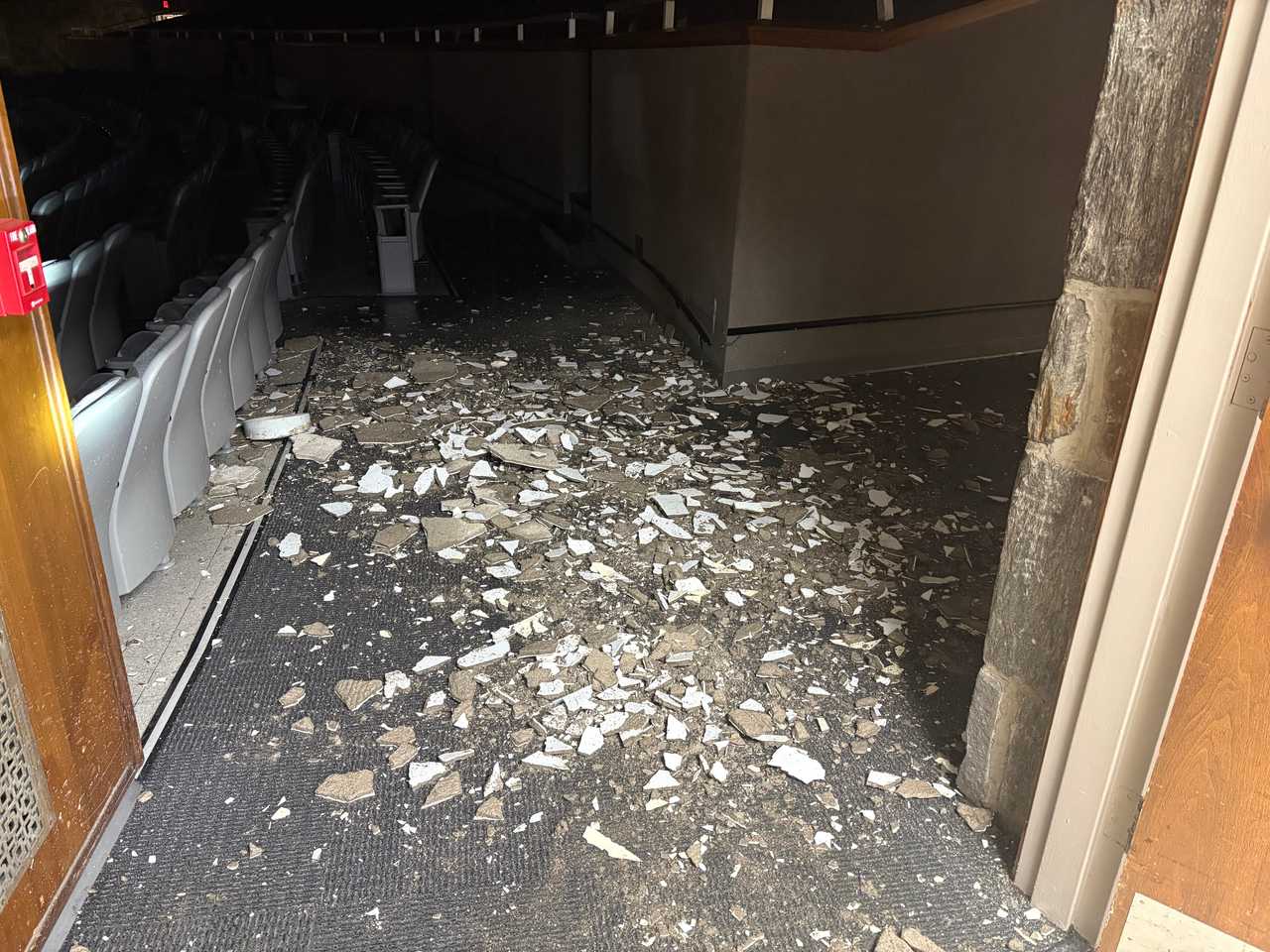
**You Wont Believe Which High School in New Jersey Is Fast Falling Apart** *Uncovering the quiet decline affecting education in a blue-collar community—what’s really behind the headlines?* In recent months, the quiet story of rapid deterioration at one New Jersey high school has sparked questions from across the country. Reporters and community advocates have begun sharing how this once-promising institution—once central to local identity—is now at the center of a growing conversation about school funding, infrastructure decay, and equity in education. You Wont Believe Which High School in New Jersey Is Fast Falling Apart isn’t a sensational headline—it’s a charged signal of deeper systemic challenges in American public schools. As curiosity builds, mobile users seeking clarity are turning to trusted sources for insight, momentum, and understanding. This article explores why this school is trending, the facts behind the decline, and what it means for families, educators, and communities. --- ### Why You Wont Believe Which High School in New Jersey Is Fast Falling Apart Is Gaining Attention in the US Public education remains a cornerstone of American life, but news of struggling schools—particularly in working-class towns—continues to surface as a quiet national concern. This particular New Jersey high school has emerged as a focal point amid broader conversations about disinvestment in public infrastructure, especially in regions historically reliant on manufacturing and blue-collar employment. As state budgets face pressure and population shifts reshape urban and suburban landscapes, schools once seen as community anchors now face compounding challenges: aging facilities, limited resources, and shifting student needs that exceed available support. The phrase “You Wont Believe Which High School in New Jersey Is Fast Falling Apart” captures the abrupt realization by many that change is no longer gradual—it’s measurable and visible.
--- ### How You Wont Believe Which High School in New Jersey Is Fast Falling Apart Actually Works Behind the headline lies a complex story of infrastructure, funding, and policy. Unlike dramatic storytelling, the decline is documented through observable shifts—collapsing roof lines, deteriorating hallways, and shrinking support staff. These are not isolated incidents but signs of systemic underinvestment. Facilities budgets have not kept pace with maintenance needs; in some cases, critical upgrades were deferred or scaled back over decades. Additionally, enrollment drops have compounded financial pressure, reducing per-pupil funding and limiting the ability to respond to evolving educational demands. These schools now operate under heightened scrutiny, especially as digital tools and modern teaching methods become standard expectations. When basic infrastructure fails to meet these benchmarks, the result is more than physical repair needs—it creates a learning environment that falls short of current national standards. The phrase You Wont Believe Which High School in New Jersey Is Fast Falling Apart echoes the shocked realization that a public school, once central to a community’s future, now visibly struggles to sustain it. --- ### Common Questions People Have About You Wont Believe Which High School in New Jersey Is Fast Falling Apart #### What exactly signs indicate a school is “falling apart”? Visible signs include crumbling infrastructure, outdated heating and cooling systems, leaky roofs, broken windows, and safety concerns. In many cases, school leadership reports delays in repairs and inconsistent access to technology or basic supplies. These are indicators of deeper resource gaps. #### How widespread is this problem beyond this school? While this high school exemplifies visible decline, similar challenges appear in multiple districts across New Jersey and other industrial-state communities. Reported declines often reflect regional patterns tied to taxation structures, demographics, and state education funding formulas. #### Is the school still serving students? Despite the deterioration, the school remains operational and enrolled, though participation fluctuates. Families often cite safety and comfort as factors influencing continued attendance, yet reputational stress compounds practical concerns. #### What can be done to turn this around? Rebuilding requires coordinated investment—state and local funding increases, prioritized infrastructure upgrades, community partnerships, and policy reforms focused on equitable resource distribution. Turnaround plans vary by district but share common goals: stability, sustainability, and improved outcomes. --- ### Opportunities and Considerations #### Pros Repeated attention creates momentum for meaningful reform. Increased visibility draws policymakers, advocates, and media focus—potentially unlocking resources and accountability. #### Cons Negative framing risks stigmatizing communities and families. Without nuanced context, headlines may reinforce stereotypes rather than illuminate systemic causes. #### Realistic Expectations Breakthrough change takes time. Infrastructure repair, staff hiring, and curriculum modernization require sustained investment and community engagement, not quick fixes.
--- ### Opportunities and Considerations #### Pros Repeated attention creates momentum for meaningful reform. Increased visibility draws policymakers, advocates, and media focus—potentially unlocking resources and accountability. #### Cons Negative framing risks stigmatizing communities and families. Without nuanced context, headlines may reinforce stereotypes rather than illuminate systemic causes. #### Realistic Expectations Breakthrough change takes time. Infrastructure repair, staff hiring, and curriculum modernization require sustained investment and community engagement, not quick fixes. --- ### Things People Often Misunderstand The phrase “You Wont Believe Which High School in New Jersey Is Fast Falling Apart” can cause misconceptions. Some interpret it as a scandal or personal failure, but it reflects structural challenges—not a moral judgment. Many assume the decline occurred overnight, yet it reflects decades of underfunding and shifting regional needs. Others expect dramatic redemption soup solutions, but recovery demands careful planning, funding stability, and realistic timelines. Understanding the root causes—not just symptoms—is essential. This school’s story is a cautionary tale about how community well-being depends on responsive, equitable education systems, especially in vulnerable neighborhoods. --- ### Who You Wont Believe Which High School in New Jersey Is Fast Falling Apart May Be Relevant For This story resonates with families seeking transparency in public education, policymakers evaluating resource allocation, and journalists covering inequality. It matters to educators working within constrained systems, local leaders advocating for support, and community members invested in school relevance. Even those unaffiliated with education may relate to broader themes: aging infrastructure, shifting economic tides, and the quiet struggle to maintain community institutions in changing times. --- ### Soft CTA: Explore, Engage, and Stay Informed To understand this school’s story fully—and how education systems across the U.S. are evolving—explore local district reports, state education dashboards, and independent studies on facility conditions. Stay curious. Engage with community forums and policy discussions. Ask questions. Seek informed perspectives—not just headlines. Awareness is the first step toward meaningful change. --- **Conclusion** You Wont Believe Which High School in New Jersey Is Fast Falling Apart is more than a headline—it’s a mirror held up to enduring challenges in American public education. Its visibility reflects growing recognition that school quality is a barometer for community health, equity, and opportunity. Behind the statistic lies a call to action: to confront reinvestment gaps, honor communities’ needs, and rebuild systems that serve every student. Acknowledging what’s happening gives stakeholders a foundation for dialogue, reform, and hope. This is not the end of a story, but the beginning of a conversation—one that matters for students, families, and the future of education across the nation.
--- ### Things People Often Misunderstand The phrase “You Wont Believe Which High School in New Jersey Is Fast Falling Apart” can cause misconceptions. Some interpret it as a scandal or personal failure, but it reflects structural challenges—not a moral judgment. Many assume the decline occurred overnight, yet it reflects decades of underfunding and shifting regional needs. Others expect dramatic redemption soup solutions, but recovery demands careful planning, funding stability, and realistic timelines. Understanding the root causes—not just symptoms—is essential. This school’s story is a cautionary tale about how community well-being depends on responsive, equitable education systems, especially in vulnerable neighborhoods. --- ### Who You Wont Believe Which High School in New Jersey Is Fast Falling Apart May Be Relevant For This story resonates with families seeking transparency in public education, policymakers evaluating resource allocation, and journalists covering inequality. It matters to educators working within constrained systems, local leaders advocating for support, and community members invested in school relevance. Even those unaffiliated with education may relate to broader themes: aging infrastructure, shifting economic tides, and the quiet struggle to maintain community institutions in changing times. --- ### Soft CTA: Explore, Engage, and Stay Informed To understand this school’s story fully—and how education systems across the U.S. are evolving—explore local district reports, state education dashboards, and independent studies on facility conditions. Stay curious. Engage with community forums and policy discussions. Ask questions. Seek informed perspectives—not just headlines. Awareness is the first step toward meaningful change. --- **Conclusion** You Wont Believe Which High School in New Jersey Is Fast Falling Apart is more than a headline—it’s a mirror held up to enduring challenges in American public education. Its visibility reflects growing recognition that school quality is a barometer for community health, equity, and opportunity. Behind the statistic lies a call to action: to confront reinvestment gaps, honor communities’ needs, and rebuild systems that serve every student. Acknowledging what’s happening gives stakeholders a foundation for dialogue, reform, and hope. This is not the end of a story, but the beginning of a conversation—one that matters for students, families, and the future of education across the nation.
This Hospital Keeps You Alive When No One Else WillRevealed!
Bo6 Secrets: What These HiddenGame Guns Get RightYou Wont Believe Which Model Dominates
This Grease Gun Is Taking DIY to a Whole New Level Its Revolutionary!
