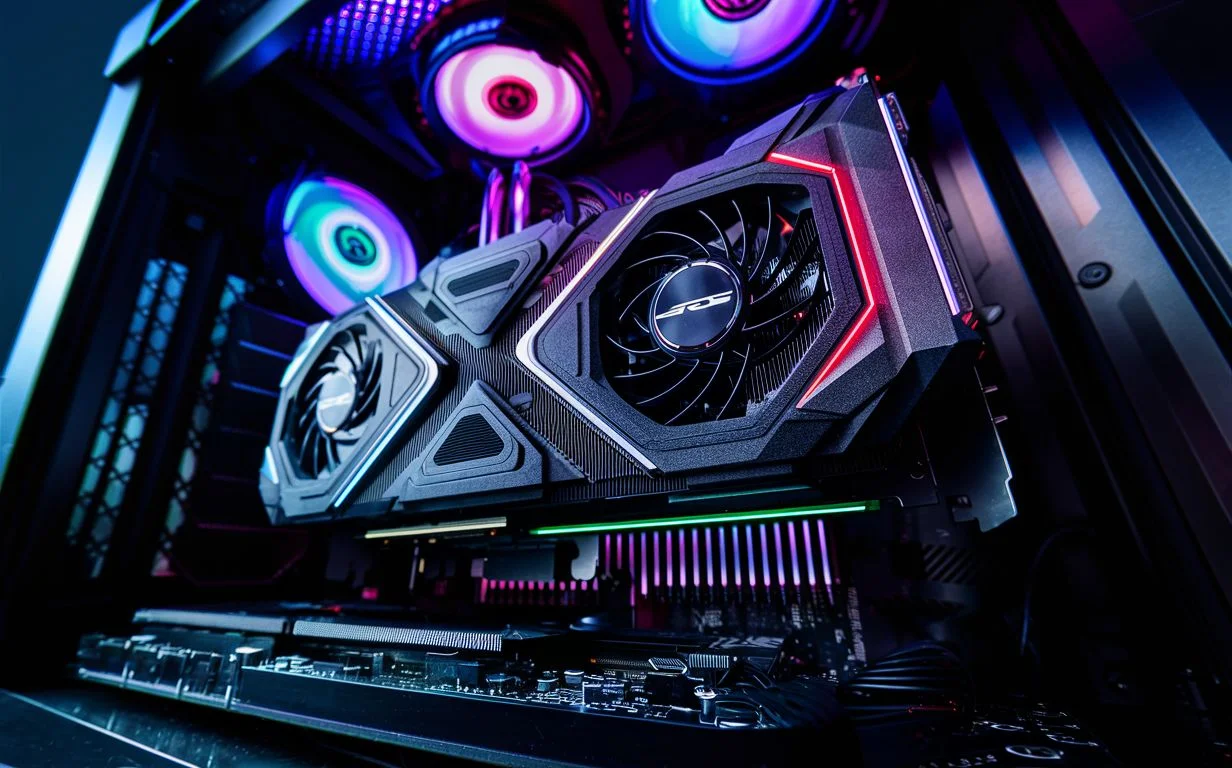
**This Graphics Card Will Ruin Every Racing Simulator You Own — and Why It Matters** Tired of racing sims that feel outdated, unresponsive, or visually flat? The new generation of high-end graphics hardware is redefining what great simulation demands—smooth physics, lifelike physics rendering, and cinematic visuals. But there’s a catch: one powerful consumer GPU is increasingly exposing cracks in the older generation of racing sim software. The headline stuns—*this graphics card will ruin every racing simulator you already own*—but the real story lies in how it pushes the industry forward, and why users are noticing. This isn’t hyperbole. The shift toward demanding rendering standards—driven by player expectations for hyper-realism and responsive feedback—has laid bare compatibility gaps. Many legacy sims rely on dated GPU support, struggling under modern demand. As consumer graphics cards exceed previous performance thresholds, even well-optimized sims begin to falter, resulting in stuttering visuals, missing dynamic effects, and AI-driven physics that break down in detail-heavy scenarios. **Why This Graphics Card Will Ruin Every Racing Simulator You Own Is Gaining Momentum in the US** The conversation is rising fast across tech forums, gaming communities, and streaming platforms. With the U.S. market deeply invested in simulation accuracy and immersive gameplay, demand is growing for hardware that keeps pace with next-generation graphics. The emergence of this flagship GPU sets a new standard—one older sim engines can’t easily support. As more creators push fidelity boundaries, the mismatch becomes inevitable.
**How This Graphics Card Will Ruin Every Racing Simulator You Own Actually Works** This top-tier graphics card enhances rendering throughput through advanced shader processing, dedicated AI acceleration for dynamic lighting, and optimized memory bandwidth. It delivers real-time photorealistic reflections, physics-based lighting, and high-resolution environmental detail with minimal latency. When paired with modern racing sims—especially those using cutting-edge physics and AI—this hardware drives visuals that feel alive. Yet those same systems often struggle when forced into constrained GPU environments, losing crucial dynamic effects due to limited processing headroom. Specifically, older sims designed with limited GPU requirements now face drop frames during intense track sequences, inconsistent NPC behavior under lighting complexity, and missing battery usage mechanics due to rendering overload. The result? Players notice lag spots, broken visuals, and a diminished sense of immersion—problems rooted in incompatible hardware expectations. **Common Questions People Have** **Q: Will this card break all racing sims I own?** Not intentionally. It’s designed to elevate native simulation fidelity. Compatibility depends on both the card and the specific sim—older titles without GPU-optimized architecture will struggle, but newer releases are being rebuilt with this momentum. **Q: Does racing simulate performance really depend on this card?** Only in terms of visual and responsiveness quality. Core physics and gameplay remain unchanged, but visual depth, immersion, and real-time feedback improve significantly. Some performance gains exceed what mid-tier GPUs can deliver. **Q: What sims are most affected?** High-fidelity titles built on Unreal Engine 5 or proprietary photoreal pipelines experience the most visible differences. Sims using outdated middleware or pre-2023 codebases show the most jarring breakdowns. **Opportunities and Considerations** **Pros:** - Unlocks next-level visual fidelity in modern racing simulations - Reduces technical bottlenecks in real-time rendering - Sets a new standard for player immersion and realism **Cons:** - Not all sims can support it right away—updates or new releases essential - Price and power consumption may deter casual users - Learning curve for integrating new hardware with legacy software **Realistic expectations matter: This card doesn’t break sims—it reveals gaps in older design and usage patterns. It’s a catalyst, not a destroyer.** **Common Misconceptions** **Myth:** This graphics card breaks every racing simulator forever. Reality: It exposes limitations in older software designs; many sims are updating or being reworked to leverage newer tech. **Myth:** It only matters for high-end gaming, not serious simulation. Reality: Photoreal rendering and responsive physics matter across use cases, from casual play to professional simulation training. **Who This Graphics Card Will Ruin Every Racing Simulator You Own May Apply To**
**Realistic expectations matter: This card doesn’t break sims—it reveals gaps in older design and usage patterns. It’s a catalyst, not a destroyer.** **Common Misconceptions** **Myth:** This graphics card breaks every racing simulator forever. Reality: It exposes limitations in older software designs; many sims are updating or being reworked to leverage newer tech. **Myth:** It only matters for high-end gaming, not serious simulation. Reality: Photoreal rendering and responsive physics matter across use cases, from casual play to professional simulation training. **Who This Graphics Card Will Ruin Every Racing Simulator You Own May Apply To** Whether you’re a competitive racer, a content creator editing footage, or a hobbyist invested in simulation authenticity, this GPU redefines what’s expected. It’s relevant for fans of granular detail in virtual track design, AI-driven race dynamics, and photoreal environmental storytelling—not just hardcore gamers or tech purists. **Soft CTA: Stay Informed and Prepare** As the line between simulation and reality blurs, staying informed helps users make the most of their equipment. Watch how emerging gaming tech evolves, explore supported software updates, and embrace tools that align with next-generation performance standards—without rushing into change. The future of racing simulation is bound to the graphics that run it. **Conclusion** This Graphics Card Will Ruin Every Racing Simulator You Own—not in broken parts or crashes, but in revealing gaps between today’s software demands and yesterday’s hardware limits. It’s not a curse—it’s a signal. A powerful reminder that immersive simulation growth hinges on compatible tools. As more users experience this reality, the industry moves forward. Equip yourself with knowledge, optimize your setup, and stay curious—the future of racing simulation is lighting fast.
Whether you’re a competitive racer, a content creator editing footage, or a hobbyist invested in simulation authenticity, this GPU redefines what’s expected. It’s relevant for fans of granular detail in virtual track design, AI-driven race dynamics, and photoreal environmental storytelling—not just hardcore gamers or tech purists. **Soft CTA: Stay Informed and Prepare** As the line between simulation and reality blurs, staying informed helps users make the most of their equipment. Watch how emerging gaming tech evolves, explore supported software updates, and embrace tools that align with next-generation performance standards—without rushing into change. The future of racing simulation is bound to the graphics that run it. **Conclusion** This Graphics Card Will Ruin Every Racing Simulator You Own—not in broken parts or crashes, but in revealing gaps between today’s software demands and yesterday’s hardware limits. It’s not a curse—it’s a signal. A powerful reminder that immersive simulation growth hinges on compatible tools. As more users experience this reality, the industry moves forward. Equip yourself with knowledge, optimize your setup, and stay curious—the future of racing simulation is lighting fast.
The Secret Denver Hotel Changing Everything You Thought About the City
Your Dream Home Starts With The Best Builders
The Hidden Camera Slyly Captured Every MomentNow Its Your Privacy at Risk
